
Selling an Inherited or Probate Property in Florida
Selling an inherited home isn't necessarily complicated. But before we talk about price, photographs, repairs or putting a sign in the yard, there is one question we need to answer:
Do you have the legal authority to sell the property?
I've seen more than one property appear in the MLS before the agent realized that the person they thought was the seller couldn't legally complete the sale yet and that a probate proceeding needed to be opened.
That's why my first conversation with someone who has inherited a home looks a little different from a typical listing appointment.
What Is Probate?
In simple terms, probate is the legal process used to administer someone's estate after death. It can involve identifying assets, addressing debts and expenses, and ultimately distributing property according to a valid will or, when there isn't one, Florida's laws of intestate succession.
But not every inherited house follows the same path.
One of the first things that matters is how the property was titled when the owner died. Property owned solely by the deceased may be treated differently from property that was jointly owned with rights of survivorship or otherwise structured to pass automatically at death.
Florida homestead law can add another layer.
That's where I stay firmly in my lane. I'm a REALTOR®, not your probate attorney. My job is to recognize when there is a legal or title issue that needs to be addressed and make sure we get the right professional involved before it becomes a problem in the middle of a transaction.
What I'll Ask When You First Call Me
Before we talk about listing the house, I'm probably going to ask you quite a few questions.
Was your name already on the title?
Was the deceased owner your spouse?
Were you on the title with a parent, sibling or other relative?
Do you know whether the deed included rights of survivorship?
Is there a will?
Has probate already been opened?
Has probate been completed and you are now the titled owner?
Are there multiple heirs or beneficiaries with an interest in the property?
You don't need to know all the answers before calling me.
The answers simply tell me what our next step should be. Sometimes we're ready to start preparing the property for market. Other times, our next call needs to be to a Florida probate attorney.
Can We List the House While It's Still in Probate?
Often, yes.
But this is one of those situations where I don't guess.
If you're currently working with a probate attorney, I'll ask for permission to communicate with the attorney so I can understand where the estate is in the process and what needs to happen before the property can be sold.
Depending on the circumstances, the personal representative may have authority to sell the real estate without separate court approval. In other estates, court authorization or other probate steps may be required before title can be transferred.
Protected homestead can create additional considerations.
My job isn't to decide what the probate court requires. That's your attorney's job.
My job is to understand those requirements, coordinate the real-estate transaction around them and make sure we aren't promising a buyer something the estate can't deliver.
If we can list before the probate process is complete, I'll also want a realistic estimate from the attorney about timing so that we can communicate appropriately with prospective buyers and their agents.
What If There Are Several Heirs?
If probate has been completed and the property is now owned by multiple people, we need to identify everyone whose signature will be required before we list.
This is something I like to address before an offer arrives.
If three siblings own the house together, for example, everyone needs to understand the plan. Are we generally in agreement about price? Are we selling as-is or considering repairs? Who is going to be my primary contact? Is someone local while the other owners live out of state?
When multiple owners must participate in the sale, decisions can require everyone's cooperation, including the listing agreement, contract, counteroffers, repair negotiations and closing documents.
Getting everyone on the same page early makes the transaction much easier when we're eventually sitting on an offer with a deadline.
What If I Don't Live in Florida?
That's extremely common with inherited properties.
You don't necessarily need to fly to Florida and spend weeks dealing with the house before you call me.
Depending on what the property needs, I can help coordinate the real-estate side of the process locally, including access to the property and the vendors or services we decide are appropriate.
The first step is simply figuring out what we're dealing with.
Don't assume you have to completely empty the house, renovate it and make it look like a traditional owner-occupied listing before it can be sold.
You may not need to do any of those things.
Should I Take an Investor Offer or Put the House on the Market?
This is one of the most important conversations I have with owners of inherited and distressed properties.
Sometimes an off-market sale makes sense.
I have investors I can contact when a family wants a straightforward offer and doesn't want to prepare the property for the traditional market. There are situations where convenience, speed and simplicity are more important to the family than squeezing every possible dollar out of the house.
But convenience has a value, and it's important to understand what you're potentially paying for it.
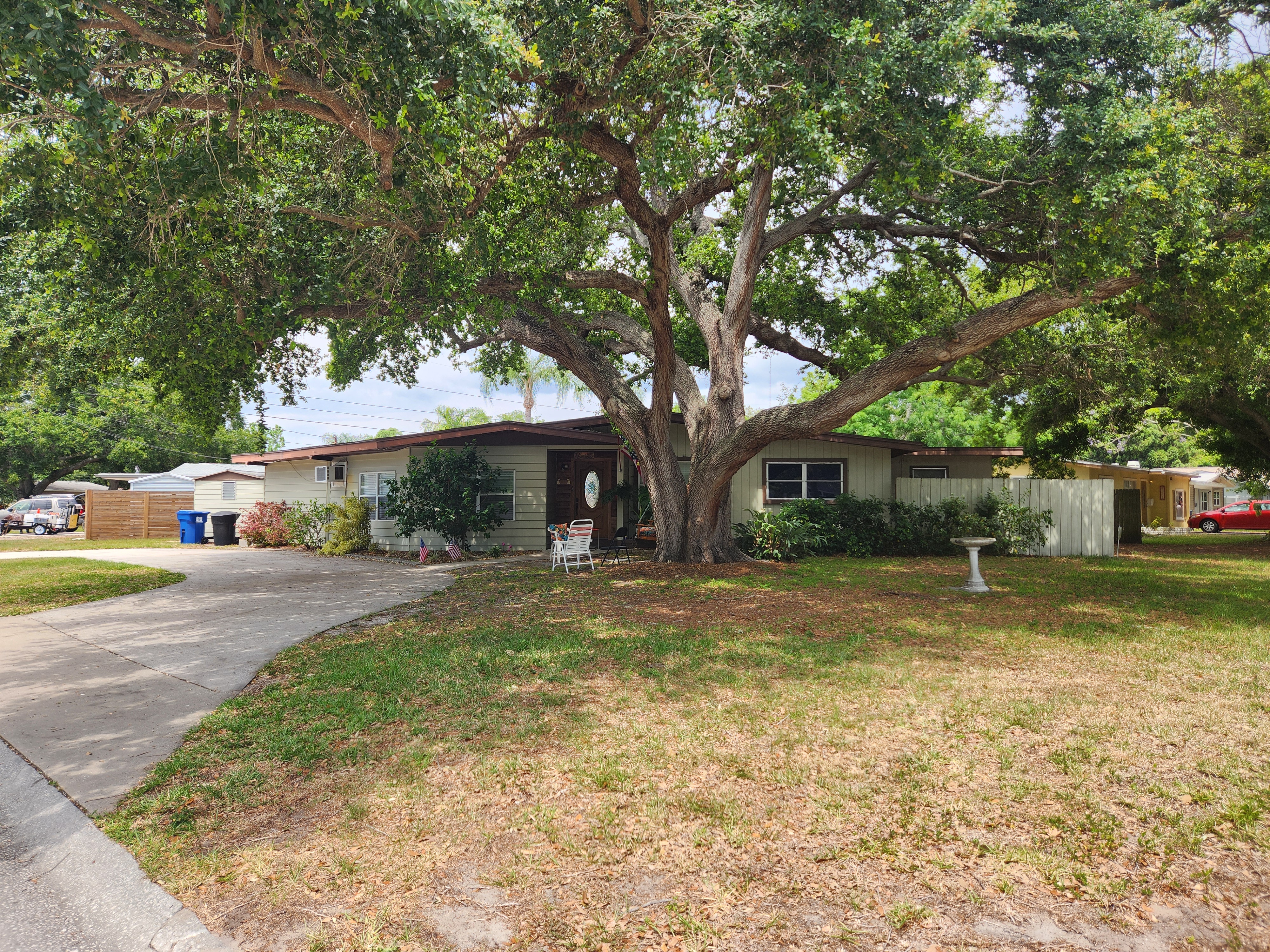
One inherited home I sold in St. Petersburg had been owned by the same family since the 1950s. I knew the family from my childhood, and I had actually been inside the house many years earlier.
When I walked through the door again, I couldn't believe it.
It looked almost exactly as I remembered it in 1985.
It was a time capsule.
The family was being inundated with off-market investor offers. And to be fair, this was absolutely a house that was going to appeal to investors.
But I also knew the location. I knew the floor plan, square footage and pool made the property desirable despite its dated condition. My advice was that if investors wanted it, we should let them compete for it.
So we put it on the open market.
We received competing offers and ultimately sold the property for $65,000 more than the family's highest off-market offer.
The buyer was still an investor.
The difference was competition.
That doesn't mean every inherited home will sell for $65,000 more on the open market. It means I want you to understand both options before you choose one.
An investor who contacts you directly is making one offer.
Putting the property on the market gives us an opportunity to expose it to many potential buyers and determine what the market is actually willing to pay.
Then you can make an informed decision.
What If the House Needs Major Repairs and We Don't Have the Money?
That's not necessarily a problem.
Sometimes the right answer is to do absolutely nothing.
If the property needs substantial renovation, we can price it accordingly and market it in its current condition to cash buyers and investors.
But there are properties that fall somewhere in between.
Maybe the house is perfectly livable but has an older roof that could create an insurance or financing problem for certain buyers. Depending on the circumstances, we may be able to structure the marketing so that a new roof or another agreed-upon improvement is completed in connection with the sale and paid from closing proceeds.
Or perhaps the property would benefit from some relatively modest preparation before going on the market, but the estate or heirs don't want to pay those expenses upfront. My brokerage also has a program that may allow qualifying sellers to defer certain approved home-preparation expenses until closing.
The important thing is not to start spending money before we know whether that spending is likely to produce a return.
A $20,000 renovation doesn't automatically make sense because someone told you the house needs updating.
Sometimes it does.
Sometimes I'd rather have the $20,000 stay in your pocket.
What Do We Do With Everything Inside the House?
This can be one of the most overwhelming parts of inheriting a home, particularly when someone lived there for decades.
Start with the things that matter.
Family photographs. Documents. Jewelry. Keepsakes. Anything sentimental or personally important to the family should be identified and removed.
After that, we can figure out the rest.
Sometimes a garage sale makes sense.
Sometimes an estate-sale company is the better option.
Sometimes items can be donated to charity.
Sometimes there are pieces of furniture or décor worth leaving temporarily because we can use them when preparing the property for photographs and showings.
And sometimes the family wants absolutely nothing to do with what's left in the house.
I've sold inherited and distressed properties where the cash buyer assumed responsibility for removing the remaining contents after closing.
There isn't one answer for every house.
And you don't have to solve the entire contents problem before you call me.
How Much Is an Inherited House Worth?
An inherited house isn't automatically a distressed property.
That's an important distinction.
I look at it the same way I would evaluate any other property: location, lot, square footage, floor plan, condition, major systems, comparable sales and the buyers most likely to want it.
Then we can look at the different paths.
What might it sell for exactly as it sits?
Would spending a relatively small amount on cleanup or preparation materially change the buyer pool?
Would larger improvements likely produce enough additional value to justify the expense and effort?
What might an investor pay off-market?
What could we reasonably expect if we exposed the property to the full market?
And most importantly, what might you actually net from each option?
The highest theoretical sales price isn't necessarily the best option if achieving it requires months of work, substantial cash and a level of involvement the family doesn't want.
My job is to give you enough information to make that decision.
What Should I Do Before Calling a REALTOR®?
Probably less than you think.
Please don't assume you need to order a dumpster.
Don't start ripping out flooring or cabinets because they're dated.
Don't spend thousands of dollars fixing things because a neighbor told you buyers won't accept them.
And don't assume an investor's unsolicited offer represents the value of the property.
Call me first.
Let me see the house, understand its condition and learn where you are in the probate or inheritance process.
If we need a probate attorney, we'll get one involved.
If we need a title question answered, we'll get it answered.
If the house should be sold exactly as it sits, I'll tell you that.
If I think there's an opportunity to spend a little money and substantially improve your return, we'll talk about that too.
And if what matters most to your family is handing someone the keys and being finished, we'll discuss the simplest way to accomplish that.
There isn't one right way to sell an inherited property.
For one family, maximizing the proceeds from the estate may be the priority. For another, speed and simplicity may matter more. Sometimes several family members are involved and need help working through the practical decisions together.
My role is to explain your real-estate options, coordinate with your probate attorney and title professionals when appropriate, and help you navigate the sale from the first conversation through closing.
You don't need to have everything figured out before you call. That's what the first conversation is for.
Frequently Asked Questions About Selling an Inherited House in Florida
Can I sell an inherited house before probate is finished?
Possibly. Depending on how the property was titled, the status of the probate proceeding and the authority of the personal representative, a sale may be possible before the estate is closed. Your probate attorney and title company should confirm what is required.
Do all heirs have to agree to sell an inherited house?
It depends on who legally owns the property and who has authority to sell it. When multiple people hold title, their participation may be required. When an estate is still being administered, the personal representative's authority and any applicable court requirements must be considered.
Can I sell an inherited house as-is in Florida?
Yes. Many inherited properties are sold in their existing condition, including homes that need substantial repairs or updating. Selling as-is does not eliminate applicable disclosure obligations.
Do I need to empty the house before selling it?
Not necessarily. Depending on the buyer and the terms negotiated, a property may be sold with some contents remaining. It's important to identify personal belongings, valuables and estate property that must be handled before agreeing to leave anything behind.
About the Author
Terri Labrie is a St. Petersburg REALTOR® with Epique Realty and a member of the Epique Estates Luxury Division. A longtime St. Pete resident with nearly 20 years of prior paralegal experience, Terri brings an investigative approach to helping buyers and sellers understand not just the property, but the details that can affect a transaction and long-term ownership. She holds the ABR®, SRES®, SRS and PSA designations and serves clients throughout St. Petersburg and Pinellas County.
Categories
Recent Posts



GET MORE INFORMATION