
Buying a Home in Florida? The Inspections You Should Know About
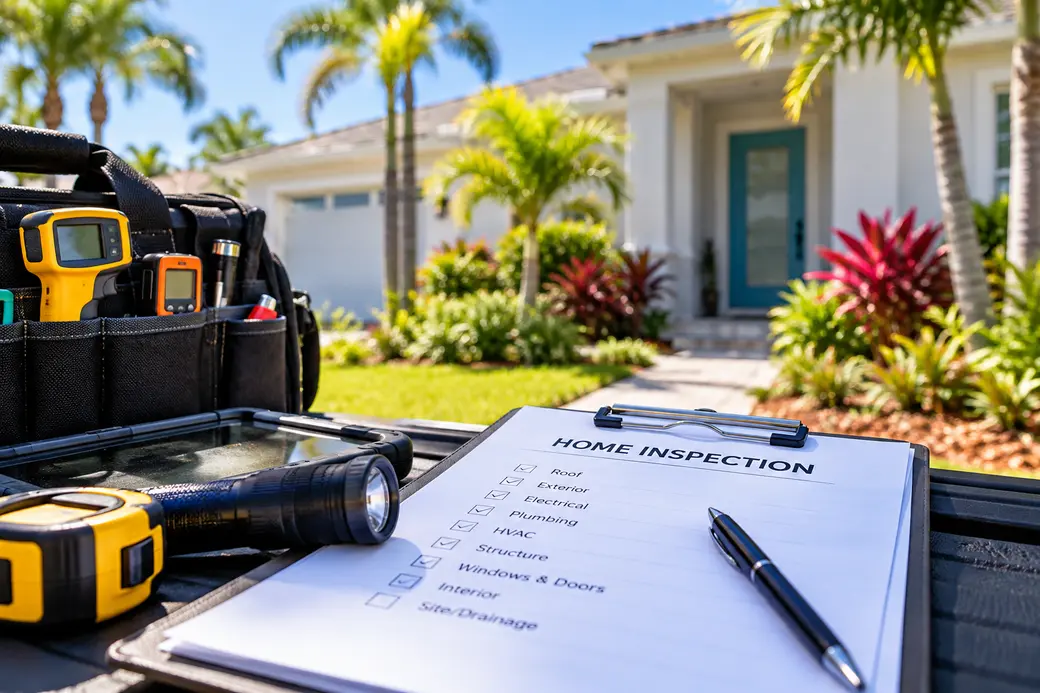
You found the house, negotiated the offer, and finally have a fully executed contract. Now comes one of the most important parts of the home-buying process: inspections.
I tell my buyers to schedule inspections as soon as possible after going under contract. Your inspection period is your opportunity to learn as much as you reasonably can about the property before moving forward with the purchase.
And here's something I tell buyers before they ever receive that first intimidating inspection report: There will always be items that need repair, even in new construction.
The goal isn't to produce a list of every imperfect item in the house and expect the seller to fix it. I want my buyers focused on the things that matter: issues involving safety, financing or insurance, significant defects we couldn't reasonably have known about when the offer was made, and anything that might have affected the buyer's offer had it been known beforehand.
The goal of an inspection isn't to find a perfect house. It's to understand what you're really buying, identify items you may want to ask the seller to address, determine whether further negotiation is appropriate, and give you the information you need to decide whether to move forward with the purchase.
Start With a General Home Inspection
For most buyers, a general home inspection is the starting point.
A home inspector evaluates the home's accessible systems and components and provides a report identifying defects, safety concerns, maintenance items and areas that may warrant further evaluation.
But there is an important limitation: inspectors can only inspect what they can access and see. They can't see behind drywall or underneath flooring, and they aren't necessarily the final authority when a problem involving a particular system is discovered.
That's why I think of the general inspection as the broad overview.
If the inspector discovers something potentially significant involving the roof, electrical system, plumbing, HVAC or structure, I may recommend that the buyer have the appropriate licensed contractor or specialist evaluate it further.
For significant repair issues, I prefer having an opinion and estimate from the appropriate licensed trade. It gives my buyer something concrete to consider and gives me something concrete to work with if we're negotiating rather than simply pointing to an inspector's observation.
I've seen firsthand how important that second step can be.
During one transaction, what initially appeared to be a relatively minor settling crack turned out to involve a structural problem at a corner of the house. The estimated repair was approximately $20,000.
That same house had another problem we couldn't see: significant sewer issues that would not have been revealed without a sewer scope. The estimated repair was another $18,000.
Suddenly, my buyer wasn't looking at a couple of routine inspection items. They were looking at approximately $38,000 in unexpected repairs. The seller wasn't willing to negotiate sufficiently, and my buyer ultimately decided to cancel the contract.
That's exactly why we inspect.
Don't Skip the Sewer Scope
I highly recommend sewer scopes to my buyers, particularly when purchasing an older home in St. Petersburg.
Why?
Because our houses and our sewer lines are old.
St. Petersburg has a substantial amount of older housing, including the mid-century homes found throughout many of our established neighborhoods. Depending on the property, that can also mean decades-old plumbing and sewer components.
A sewer scope uses a camera to inspect the inside of the sewer line. It can reveal conditions you simply aren't going to see while touring a house, including deterioration, cracks, root intrusion, obstructions, damaged joints and other defects.
Cast-iron piping deserves particular attention in older Florida homes. Age alone doesn't tell us whether a pipe needs replacement, but deterioration, corrosion and buildup can eventually create expensive problems.
Sometimes the pipe may still be structurally serviceable but have significant scaling or buildup inside. Depending on the condition, cleaning, milling, jetting or other work may be recommended. In other cases, portions of the sewer line may require repair or replacement.
Then there's Orangeburg pipe.
Orangeburg is a bituminous fiber pipe that was historically used for sewer laterals. As it ages, it can deform, deteriorate and eventually collapse.
And St. Pete has another wrinkle: additions.
Homes here have often been expanded and remodeled over many decades. A sewer line that was originally located outside the footprint of a house may no longer be outside after a later addition was constructed.
That means a problem someone might expect to require digging up part of the yard could potentially be underneath part of the house.
Why I Prefer a Plumber for Sewer Scopes
A home inspector may offer sewer-scope services, but my personal preference is to have the scope performed by a licensed plumber.
There's a practical reason.
If a home inspector identifies a potentially significant sewer problem, the buyer will likely need a plumber anyway. We need someone qualified to evaluate the plumbing condition, explain what may need to be done and provide an estimate for the repair.
For negotiation purposes, that estimate can be extremely valuable.
I'd rather have my buyer pay once and start with the subject-matter expert than potentially pay for a scope and then pay again for the plumber's own scope and evaluation.
And yes, I recommend a sewer scope even on new construction.
New doesn't mean flawless. Construction defects happen. I'd rather my buyer discover a problem before closing than after moving in.
“It's a Block House. Do I Really Need a Termite Inspection?”
Yes.
In Florida, it's not a matter of if you get termites. It's a matter of when.
Florida's climate is very friendly to termites, and both drywood and subterranean termites are found here locally.
Drywood termites live within wood and can enter structures during swarming. Subterranean termites live underground and can travel to wood sources through mud tubes.
The treatment depends upon the type and extent of the infestation. Extensive drywood infestations may require structural fumigation, commonly called tenting, although localized treatment methods may be appropriate in some situations. Subterranean termite treatment may involve soil treatments, bait systems or other approved methods.
And concrete-block construction does not mean you're immune.
I have two firsthand examples.
Last year, an inspection on a block home discovered an active drywood termite infestation in the attic. There weren't trees leaning against the house or obvious exterior conditions screaming “termites.” They were simply up there, in the wood components of the roof structure.
Fortunately, the infestation appeared relatively recent and significant structural damage had not occurred. I represented the buyer, and we were able to negotiate for the seller to have the home treated.
My other example goes much further back because it happened in a block home I personally owned.
That house had frame entryway columns covered in stucco that extended below grade. Subterranean termites were able to use that condition to enter the structure without making their presence obvious.
Two block homes. Two different kinds of termites. Two very different entry points.
So yes, I recommend a WDO inspection whether the house is block or frame.
And technically, WDO means Wood-Destroying Organism, so the inspection addresses more than just termites. Under Florida law, the definition also includes powder-post beetles, oldhouse borers and wood-decaying fungi.
What About a 4-Point Inspection?
A 4-point inspection focuses on four major components of the property:
Roof, electrical, plumbing, and heating/air conditioning.
Unlike your general home inspection, a 4-point inspection is primarily associated with insurance underwriting.
Not every Florida home automatically needs one. An insurance company may require a 4-point inspection based on the age and characteristics of the property and its own underwriting requirements. For example, I recently represented a buyer purchasing a four-year-old home in Wesley Chapel, and a 4-point inspection wasn't required. Florida's Department of Financial Services similarly describes the 4-point as an inspection an insurer may require when insuring an older home.
That's very different from much of the housing stock we encounter in St. Petersburg, where homes may be several decades old.
Because inspection periods are short and we don't want to lose valuable time determining whether a particular insurance carrier will require one, I have my buyers order the 4-point along with their other inspections. If we learn that it isn't needed, that portion can be canceled.
Wind Mitigation: An Inspection That May Save You Money
A wind mitigation inspection is different again, and it's another inspection I recommend my buyers order.
Instead of looking primarily for defects, a wind mitigation inspection documents construction features used to determine what wind mitigation credits may apply to the homeowners insurance windstorm premium. Florida uses a Uniform Mitigation Verification Inspection Form for this purpose.
In Florida, where the cost of homeowners insurance can be a significant part of the monthly cost of owning a home, I want my buyers to have that information.
What About Mold?
Mold is a little more nuanced.
Florida has heat, humidity, heavy rain and tropical weather, and our area has experienced significant storms and water intrusion in the past. If there's evidence or a history of water intrusion, unexplained moisture, suspicious staining, odors or other conditions that concern you, additional investigation may be warranted.
That doesn't necessarily mean every buyer needs routine mold sampling.
The EPA notes that when visible mold is already present, sampling is usually unnecessary. Finding and correcting the underlying moisture problem is generally more important. If hidden mold is suspected or there are other concerns, an experienced professional can help determine whether additional investigation or sampling makes sense.
This is also an area where your own comfort level matters. If mold is an important concern for you, consider adding a mold inspection or assessment to the inspections you schedule.
Other Specialty Inspections
Every house is different, so the inspections shouldn't necessarily be identical for every buyer.
Depending on the property and what the general inspection reveals, additional evaluations might include a roofer, electrician, plumber, HVAC contractor, pool professional, structural engineer or other qualified specialist.
The point isn't to order every inspection anyone has ever invented.
It's to look at the particular house you're buying, its age, construction, condition and history, and determine where additional information would be valuable.
Be There for the Inspection When You Can
I generally meet the inspector at the property at the beginning of the inspection. I introduce myself, make sure they're aware of any particular items my buyer or I noticed or have concerns about, and then I get out of their way and let them do their job. The inspector will go over their findings at the end. It's incredibly helpful for the buyer to be present for the debrief, ideally in person but, if not, then by phone.
There's tremendous value in having an inspector point to something and explain it while you're standing there. A photograph and paragraph in a 50-page report can make something sound terrifying. Seeing the condition in person and hearing the inspector explain what it means can provide very different context.
Don't Panic When You Get the Report
This may be the most important advice I give buyers.
There will be things on the inspection report.
There should be.
Even brand-new houses can have inspection findings. An older Florida home may produce pages and pages of observations, maintenance recommendations and defects.
That doesn't automatically mean it's a bad house.
I help my buyers bring the focus back to what matters.
Is there a safety issue?
Could something affect financing or insurance?
Did the inspection uncover a significant defect that couldn't reasonably have been known before the buyer made the offer?
Is there an expensive condition that might have affected the buyer's offer had it been known beforehand?
Does something need further evaluation by a licensed trade or specialist?
Those are the conversations worth having.
The purpose of an inspection isn't to make you afraid of the house. It's to give you information while you still have contractual options.
Sometimes that information gives us a basis for negotiation.
Sometimes it tells us we need another expert.
Sometimes the problem isn't nearly as frightening as the inspection report initially made it sound.
And occasionally, like the house with approximately $38,000 in unexpected structural and sewer repairs, the information helps a buyer decide that this simply isn't the house they want to own.
That's valuable information too.
Buying a Home in St. Petersburg or Pinellas County?
Florida homes come with their own set of considerations, and our older St. Petersburg housing stock makes understanding the condition of a property particularly important.
My job isn't to choose your inspectors or decide which risks you're comfortable accepting. You should independently research inspection companies, read reviews and choose the professionals you're comfortable hiring.
My job is to help you understand the process, make sure you know the questions worth asking, help coordinate access for the inspections with the other parties to the transaction, and help you understand your options when the results come in.
Because the goal isn't a perfect inspection report.
It's going into closing knowing as much as reasonably possible about the home you're buying.
Frequently Asked Questions
What inspections should I get when buying a home in Florida?
A general home inspection is usually the starting point, but additional inspections may make sense depending on the property. I commonly recommend a WDO inspection, sewer scope, 4-point inspection and wind mitigation inspection to my buyers. Depending on the home's condition and history, mold or other specialty inspections may also be appropriate.
Do I need a sewer scope when buying a home in St. Petersburg?
I highly recommend one, particularly with St. Petersburg's older housing stock. A sewer scope can reveal deterioration, cracks, root intrusion, obstructions and other problems that won't be visible during a general home inspection. I recommend them even on new construction because new doesn't necessarily mean defect-free.
Do block homes in Florida need termite inspections?
Yes. Concrete-block construction doesn't eliminate the possibility of termites because Florida homes still contain wood components. Both drywood and subterranean termites are found in Florida, and I've personally encountered termite infestations in block homes.
Is a 4-point inspection required when buying a home in Florida?
Not necessarily. A 4-point inspection is primarily used for insurance underwriting, and whether one is required can depend on the home's age, characteristics and the insurance company's underwriting requirements. Because inspection periods are short, I generally have my buyers order one with their other inspections and cancel that portion if we determine it isn't needed.
What's the difference between a 4-point inspection and a wind mitigation inspection?
A 4-point inspection focuses on the roof, electrical, plumbing and heating/air-conditioning systems and is primarily used for insurance underwriting. A wind mitigation inspection documents construction features that may qualify the property for windstorm insurance credits or discounts.
Should I attend the home inspection?
I think there's real value in being there for the inspector's final debrief. Seeing an issue in person while the inspector explains it can provide context that's difficult to get from a photograph and a paragraph in a lengthy inspection report. If you can't attend in person, being available by phone for the debrief is the next best option.
About the Author
Terri Labrie is a St. Petersburg REALTOR® with Epique Realty and a member of the Epique Estates Luxury Division. A longtime St. Pete resident with nearly 20 years of prior paralegal experience, Terri brings an investigative approach to helping buyers and sellers understand not just the property, but the details that can affect a transaction and long-term ownership. She holds the ABR®, SRES®, SRS and PSA designations and serves clients throughout St. Petersburg and Pinellas County.


GET MORE INFORMATION